With the rise of alternate fuels, what does the service station of the future look like?
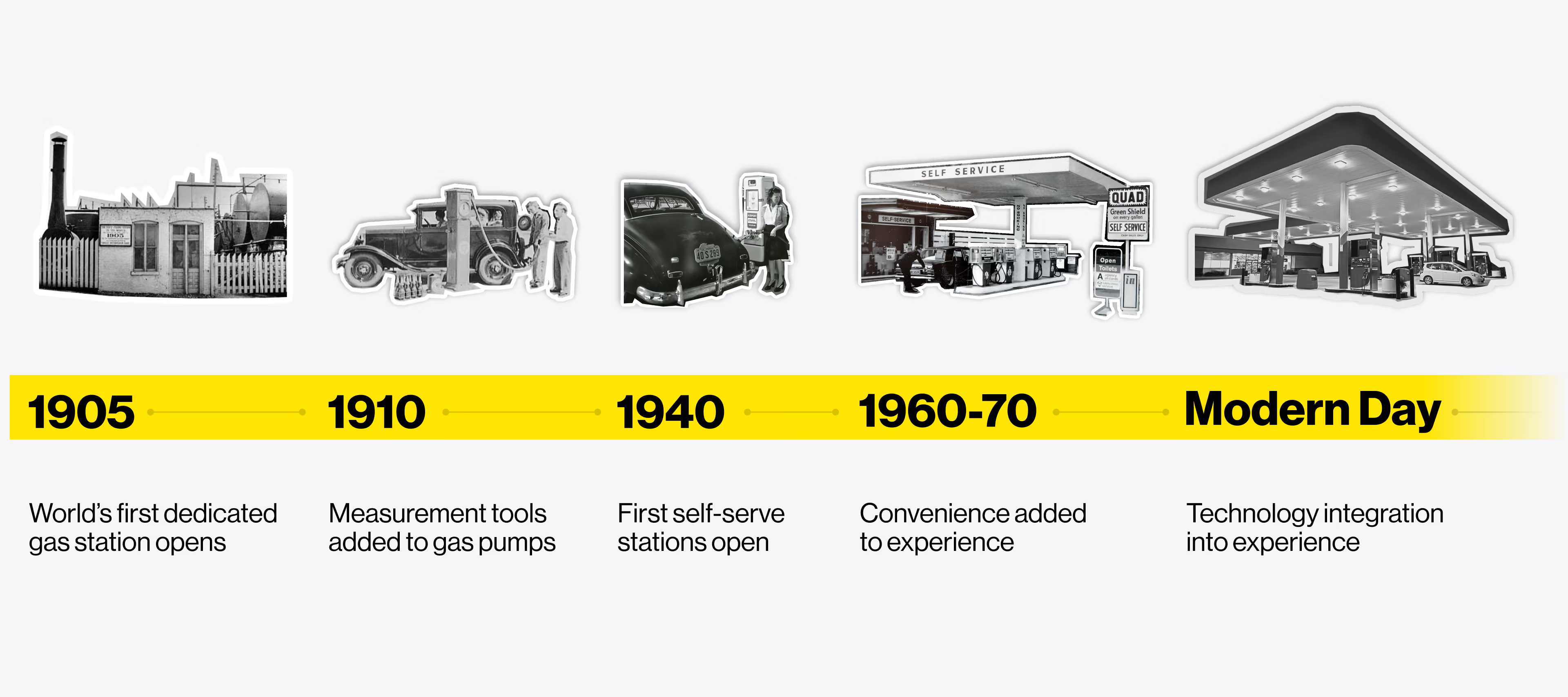
Sketchy food, suspect bathrooms, and a formula that hasn't budged in decades.
For as long as I can remember, fuel stations (or servos, as we call them here in Australia) have been more or less the same: expensive and slightly sketchy food, unkempt bathrooms, and an attendant overly eager to upsell a Big M near its sell-by date.
Good for fuel, and a last resort for everything else.
When an experience has been that consistent for that long, it's hard to picture it any other way. And yet, as electric vehicles and alternative fuels gain traction, the question has to be asked: what does the service station look like when fossil fuels are out the door?
Our client, a leading global fuel provider, grappled with this very transition, contemplating how they can evolve in this rapidly changing landscape.
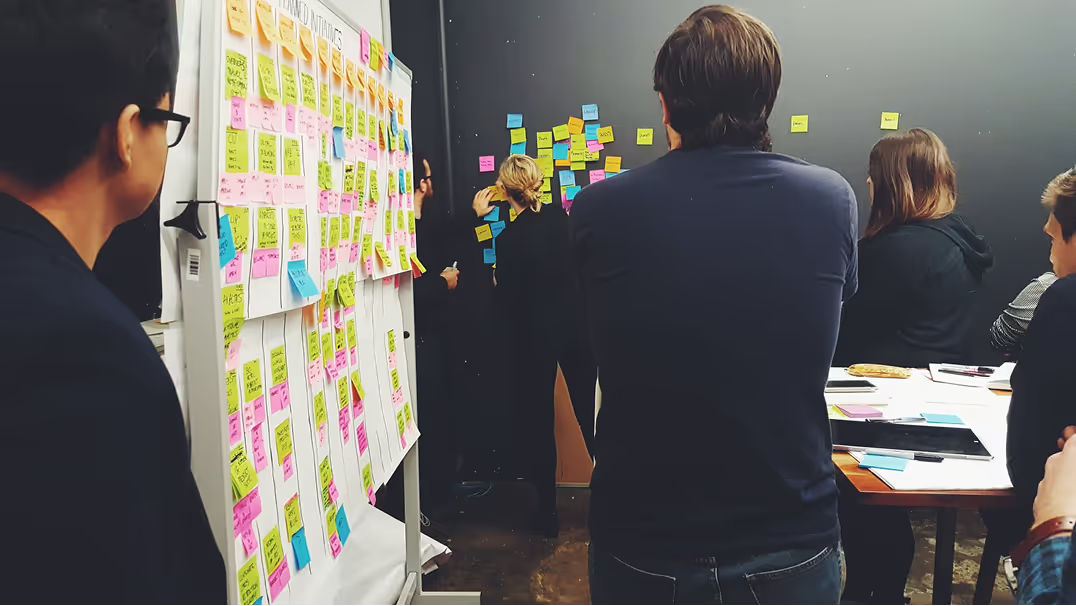
To glimpse the future, we first needed to understand the present state of the industry.
We started inside the business, running workshops and one-on-one interviews with stakeholders and subject matter experts. We went in with three goals.
Fieldwork is slow and expensive, and choosing the wrong sites would have given us a beautifully evidenced answer to the wrong question. The people who knew the network could point us at where the transition would be felt first, so we let them guide the scope rather than set it. A list chosen entirely by the business would have carried the business' assumptions into the field with us, so we kept sites and customer types nobody had nominated, and left ourselves room to be surprised.
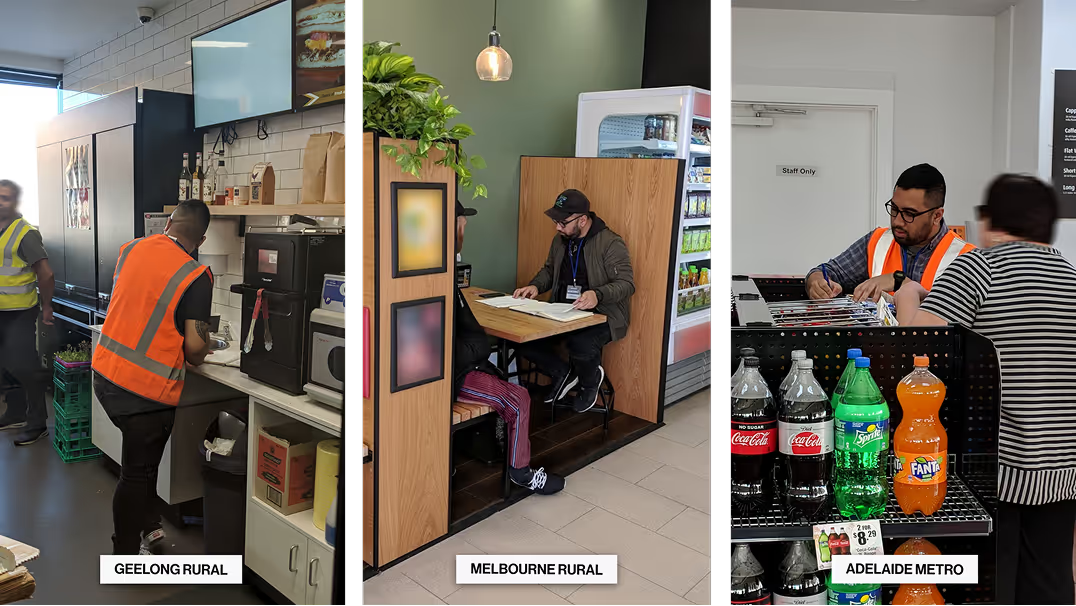
Three weeks, multiple states, and a deliberate decision not to bring anyone into a room.
Almost everything worth knowing about a servo visit is shaped by the circumstances you turn up in: how late it is, whether the kids are in the back, whether the bathroom looked alright from the door. Sit someone in a research suite and they'll tell you what they think of servos. Stand in one with them and you see what they do.
A colleague and I worked our way through sites across multiple states, observing from a discreet distance so we weren't shaping what we saw, then using stratified random sampling to choose who we approached. Left to chance, you end up talking to whoever is most willing to talk to a stranger. The interviews gave us the story of a visit before, during, and after, and a short survey at the end gave us something we could count.
All up we observed hundreds of customers, interviewed and surveyed more than 70, and shadowed 14 attendants to see the service from behind the counter. We also dropped in on competitors flagged as exemplary, partly to benchmark and partly to see what good even looks like in a category where the bar was already so low.
Hundreds of hours of anecdote, turned into something a board could act on.
To make sense of everything we'd collected, we grouped the qualitative data into themes using affinity diagramming, translated the frequency of each point into a percentage, and paired it with direct quotes from customers as evidence. A percentage on its own is arguable and a quote on its own is anecdote; together they let a room of executives feel the problem and size it in the same breath.
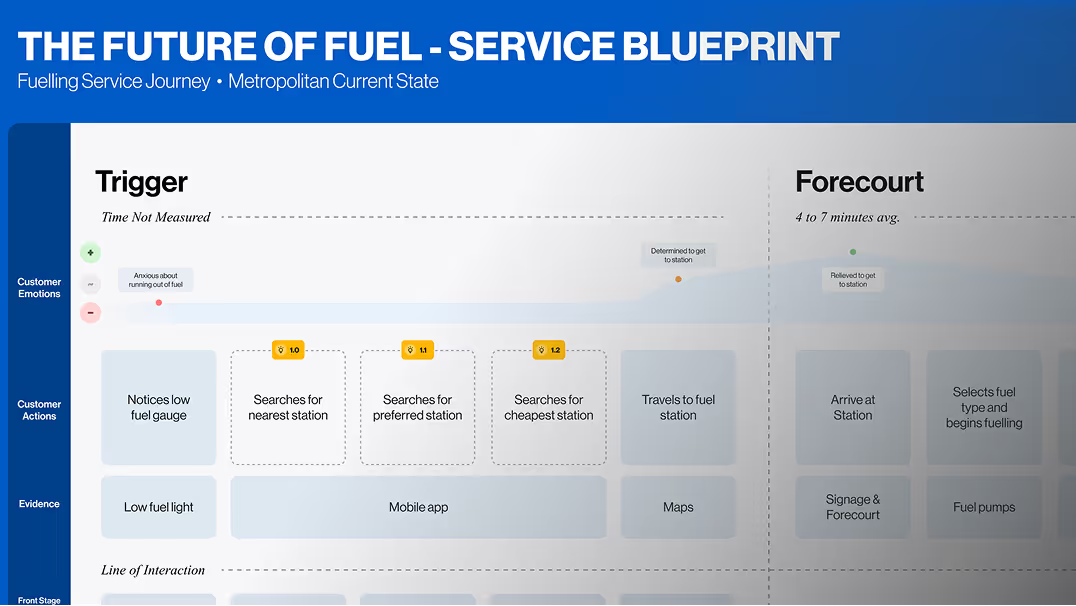
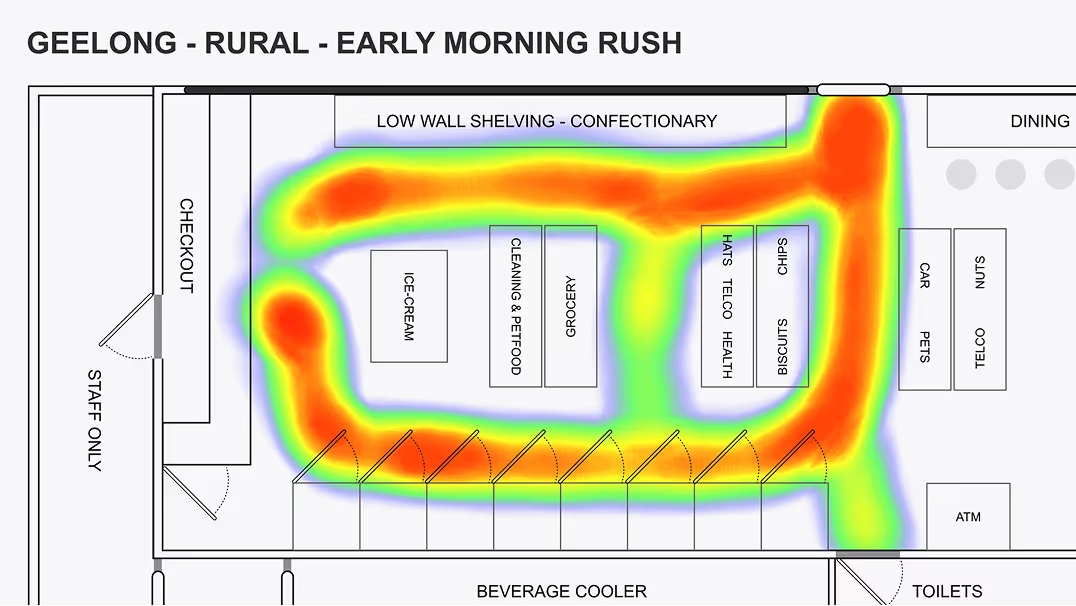
Those insights landed in two artefacts. Current and future state blueprints mapped the whole arc of a visit, with each finding placed at the moment in the journey it occurred. And heat maps of the stores we studied showed how people moved, what they'd come in for, and which displays and advertising actually pulled attention.
The finding that reframed the brief. The transition was never really a technology problem.
The research told a consistent story: people don't choose service stations, they put up with them. They're seen as unsafe after dark, they smell like petrol (billed extra for that insight), the food is expensive and not entirely trusted, and the amenities are used out of necessity rather than choice. None of that is caused by fossil fuels, and none of it is fixed by installing a charger.
People don't choose service stations, they put up with them.
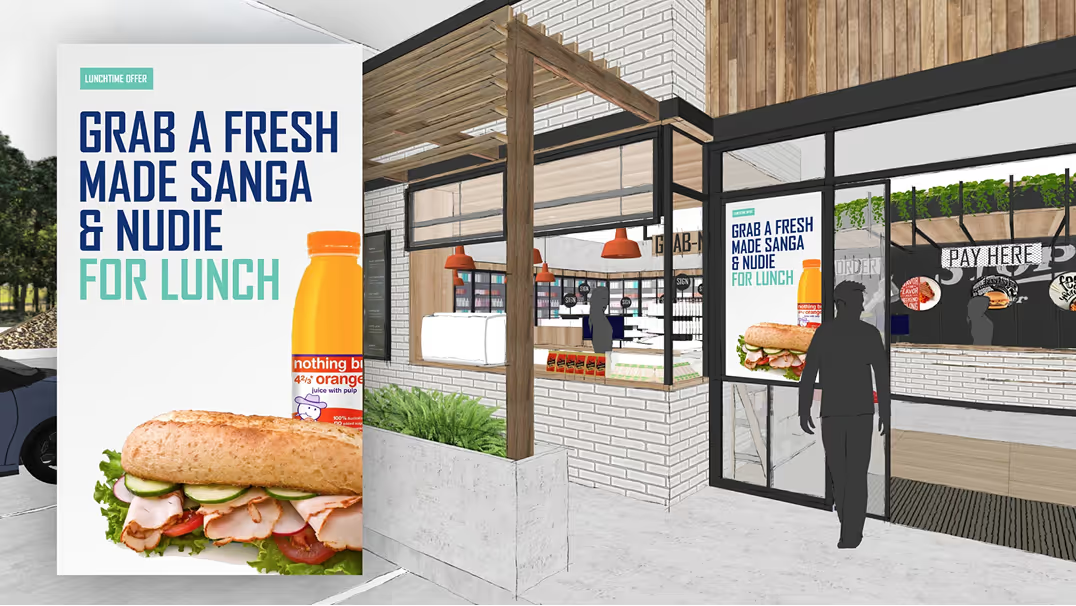
What electric does change is the maths of a visit. A two minute transaction becomes a twenty minute stay, and once you're asking someone to wait around, the inside of the building stops being an add on and becomes the main sell. Our recommendation put the in-store experience at the centre of the transition.
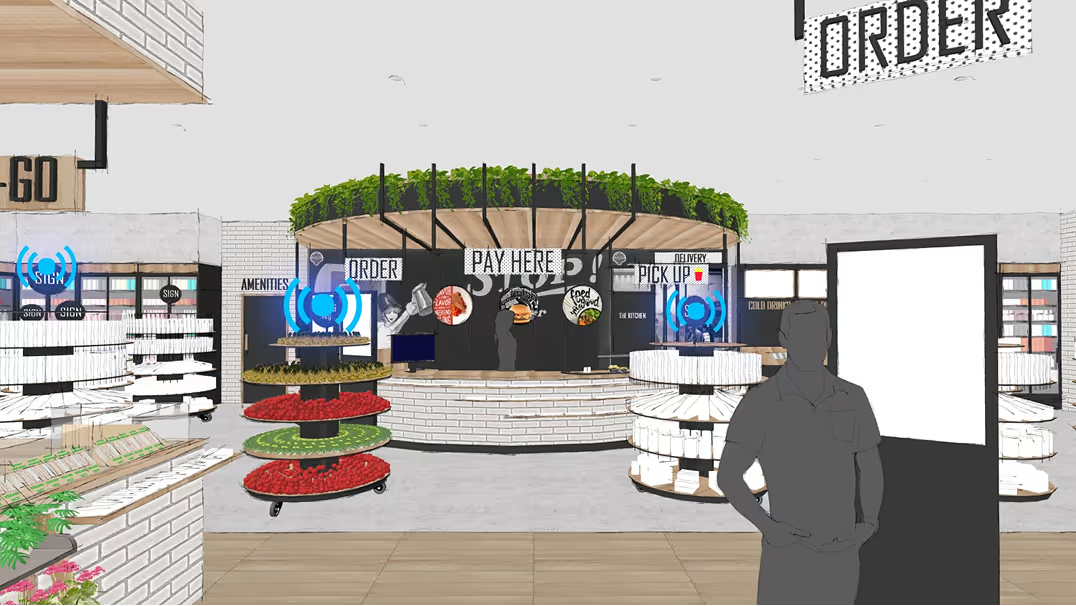
To make it tangible, we partnered with architectural firm I2C to create 3D renders of what these spaces could look like, giving the client a place to imagine standing in rather than another deck to flick through.
Service stations of the future should be a place to refuel people; somewhere to get a decent meal, take a rest, break up a long drive. It just happens you can charge your vehicle as well.
Twenty years is a long trip. It helps knowing where you're going.
Since the engagement, the client has committed to becoming net zero within twenty years. A shift that size was never going to come from a single research project, but it needed a picture of the destination worth steering toward, and that's what the work gave them: an evidenced case that the service station of the future is built around people, and a rendered glimpse of what that could look like. The pumps will change either way. The reason to pull in is the part they now get to design.